

00Flare summary
Flare is a 31.3 g CX Main Blade.
Used in
01Description
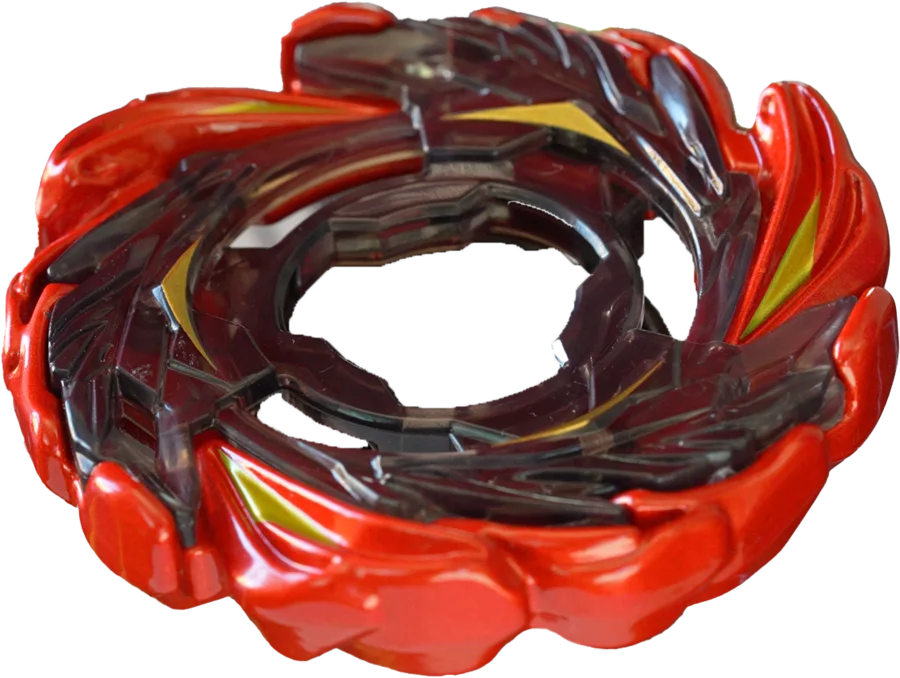
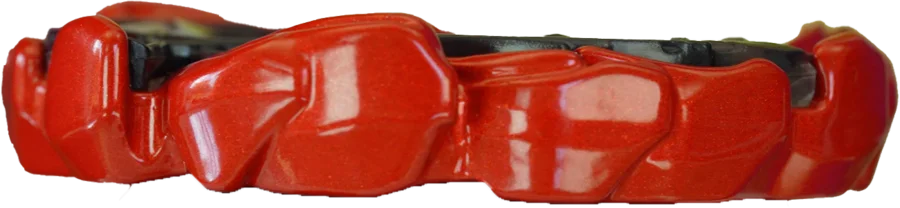
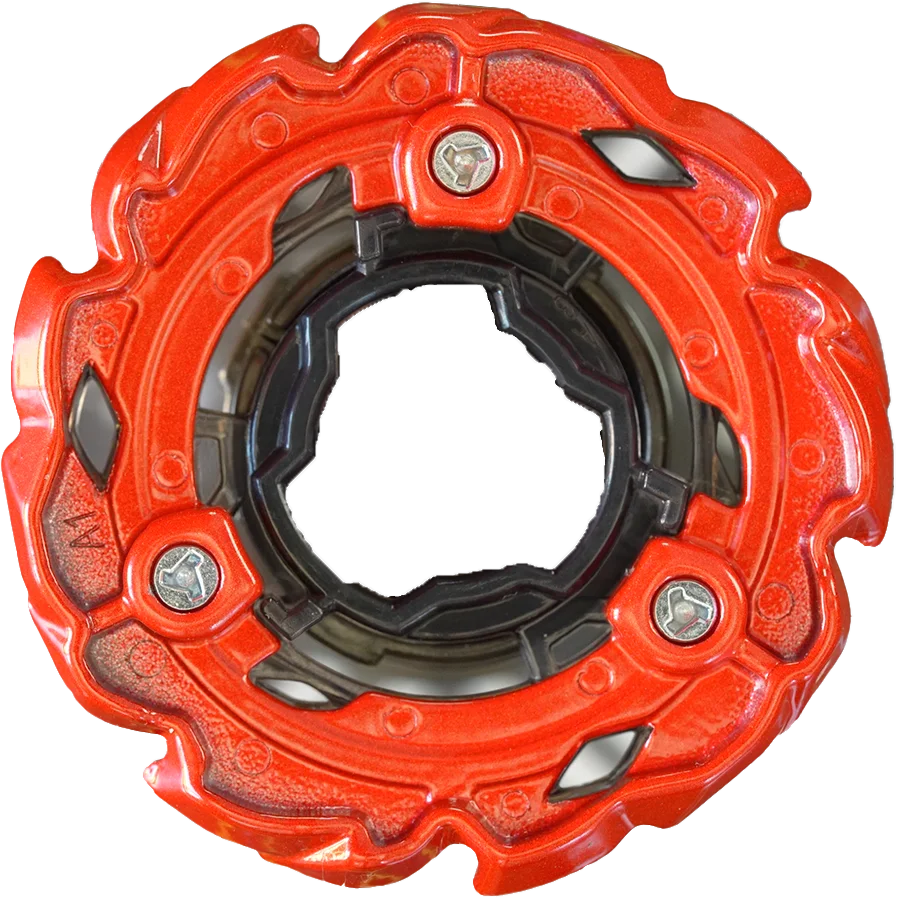
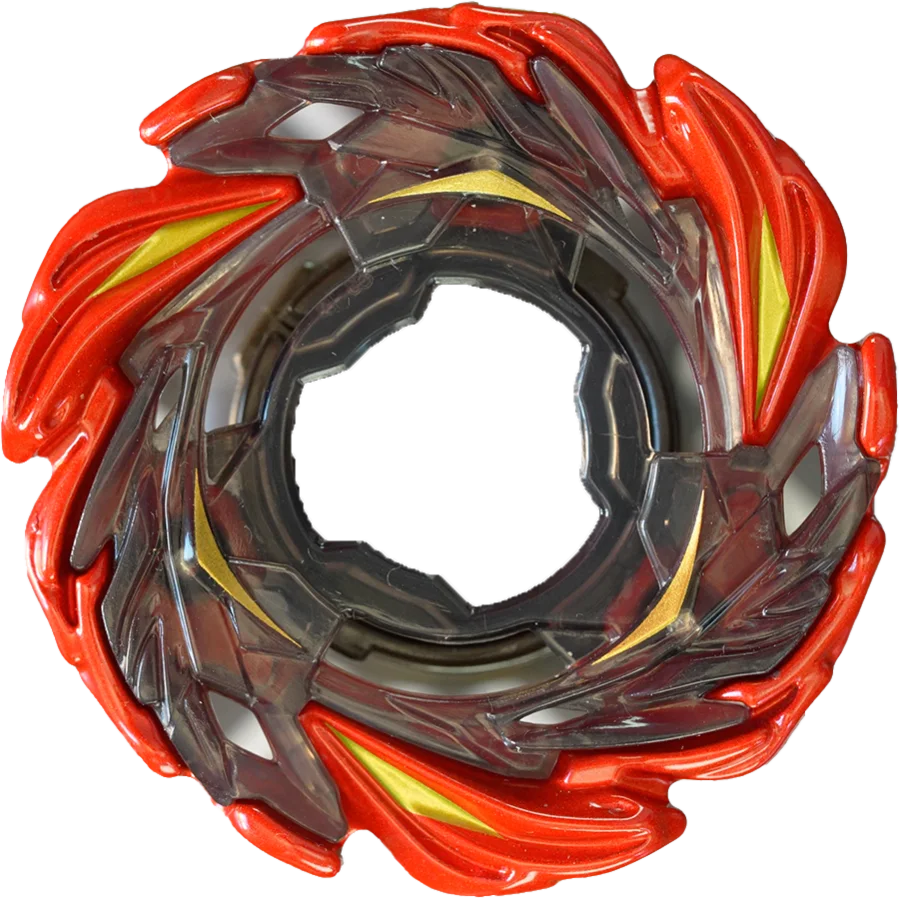
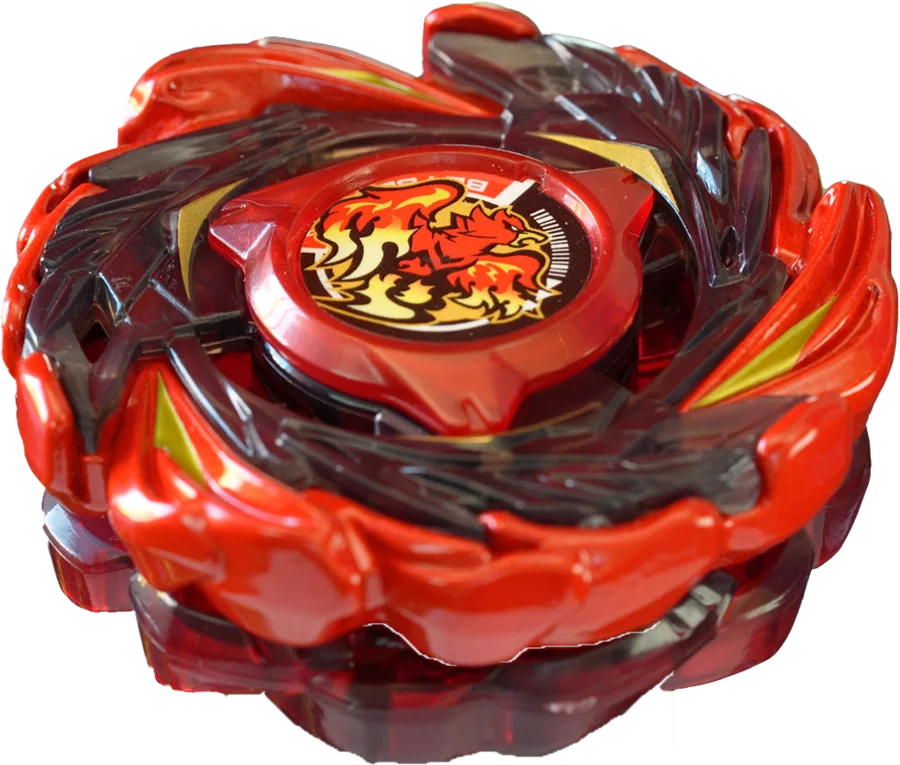
PhoenixFlare is made up of six main sections: three long wings covered in black plastic and three shorter ones with an upward incline. Together, its raised details simulate a total of 15 feathers. At first glance it looks almost perfectly circular, but in reality the long wings are mostly straight, almost like small walls. The shorter ones, while smooth along the edges, slightly protrude at the front, forming a hook. On the top, you can also see the three angled tips of the small wings. All of this gives it a decent aggressive potential. Viewed from underneath, most of its weight is concentrated on the upper central disk, leaving fairly thin edges, which raises its center of gravity.
02Performance
In theory, PhoenixFlare aims to take advantage of its feather-like ridges to wear down the opponent with constant Barrage attacks. The issue is that these ridges are so subtle that the effect is minimal and not very effective. However, its true strength lies in pushing with great consistency. This comes from the straight shape of the long wings and the front hook of the short ones, which extend through almost the entire thickness. Because of this, it doesn’t rely on a super specific height or contact point to land solid hits, allowing it to connect evenly across its whole perimeter. The hits may not look flashy, but they are surprisingly reliable. Another strong point is that it doesn’t favor left-spin equalization, since its “walls” generate translational push rather than rotational force. Its rear spikes also absorb a lot of energy when struck, making it a decent counter against them. On top of that, it offers respectable defense thanks to its low-recoil disk shape, which helps absorb and reflect hits effectively, especially against aggressive Beys. That said, you’ll need to compensate for its high center of gravity with low-height combos to reduce its high risk of getting knocked out. In this area, Might, Blast, and even Reaper stand out more, especially the first two due to their higher weight and better spin time. While its stamina is decent for a CX, it still falls short compared to stamina-focused options like WizardRod or ClockMirage. Leaving it fully stationary wastes its aggressive potential and limits its versatility a lot. Because of this, it’s much better to keep it moving, from super aggressive setups to calmer but constant ones. This gives it the ability to attack, dodge, and defend as needed. Unlike other CX Blades that need very specific heights or angles to work, Flare can push and deflect hits with its entire side and even its top. This makes it one of the most consistent and easiest CX Blades to use. It’s quite similar to Might, but Flare leans more toward aggression, while Might focuses more on defense and stamina. Its main weakness remains the high center of gravity, which can cause wobbling and make it vulnerable to easy knockouts. If it falls into that trap, it tends to get stuck and recovering becomes extremely difficult. Even so, its solid balance between defense and aggression makes it a standout Bey within its line.
03Ways to use it
At mid heights (60–70) with flat Bits. It works from the classic Rush to more aggressive options, depending on the Blader’s preference. That said, it clearly benefits from more controlled movement Bits to avoid self-KOs and gain better accuracy and spin time. For maximum mobility, a plastic Chip is recommended.
At mid heights with Bits like Kick, it can create surprise pushes, but it requires stronger launches. In this case, metal Chips can help reduce self-KOs, at the cost of stamina.
At mid heights with semi-aggressive movement Bits like Elevate, Level, or Jolt. This allows switching between defense and attack with good mobility. A plastic Chip helps keep its agility.
In heavy, low combos with stationary Bits, it can tilt to deflect strong hits, though it loses versatility. Here, a metal Chip can help reduce knockout risk and maximize defense.
With Bits like Point or Hexa, it can return hits using the rail, but this style is less reliable due to moments where it becomes completely stationary.
 Why does it work this way?
Blader's Path explains it step by step: Bey physics, how to build combos and how to test them.
See the book
04Where to get it
Show products 1
Takara Tomy 1
- CX-12 PhoenixFlare Z9-80WW